
 It has been an uncharacteristically slow start to the summer flea season, probably due to the unseasonal weather. It may also be because a higher proportion of our clients are taking advantage of our reminder system and are using flea prevention treatments regularly. An increasing number have shifted from the monthly treatments like Advantage and Advocate to the longer acting options like Bravecto and Seresto. These typically give better flea control because there are less opportunities to miss treatments.
Dogs are usually accused of carrying fleas more than cats because dogs tend to scratch more. However we find fleas on cats more often than dogs. Unless cats become allergic to fleas there are typically few clues that they are carrying even large numbers of fleas.
Most of you will know that fleas lay eggs. They look just like shiny white hen’s but at 0.5mm long are only 1/100th the size. Fleas lay 30 – 50 eggs a day for about a month. These fall off the cat into your bedding, the carpet and outside in the garden. The eggs hatch after a week or two into small maggots which hate light so burrow deep in furnishings, carpet or undergrowth, feeding on organic debris. They then go into a cocoon like a butterfly or moth and will stay there, protected against extremes of heat, drying or cold, until they sense vibration or nearness of an animal host.
This is why you can come home from holidays to a house empty for 3 weeks and find it hopping with fleas. There has been a mass hatch from the cocoons in response to your arrival and the fleas are keen to find their first meal!
Prevention is better than cure!
 If you do come home to this situation don’t unpack the car, the family and the pets. Fly spray the house thoroughly, then go pick up some nice takeaways to have at the beach, in a park or by the Maitai. If we are open pop in and pick up a home flea treatment pack for a longer-term solution. You can return home in 1 – 2 hours. That crop of fleas will be dead. There will be more to follow. You can deal with them using the flea treatment pack.
Prevention is simple. Regular treatment with any of our recommended products. But you do have to start well before you go on holiday!
Barley grass is another unwanted guest
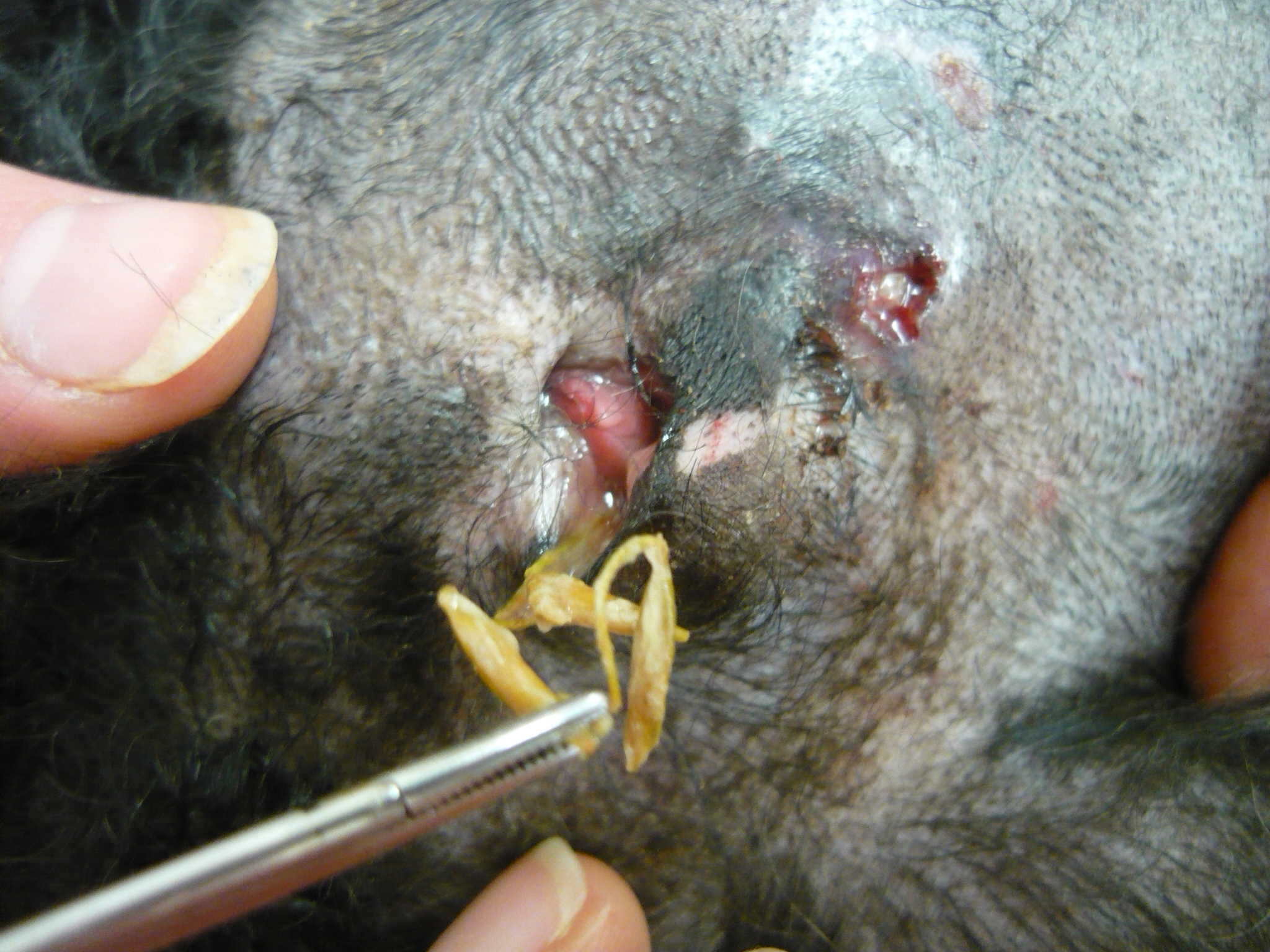
Barley grass causing many weeping wounds
We have operated on several dogs in the last month here at Halifax, either with nasty infected wounds caused by barley grass puncturing their skin and migrating through tissue or entering their ears and puncturing their ear drums.
You need to be particularly vigilant if you have a dog with a longer coat. Spaniels, poodle crosses, Beardies, Golden and Curly Coat retrievers are amongst the high-risk breeds. If you are unsure what to look out for, or what to do if you think your dog might be affected check this blog on our website.
Our best wishes for you and your pets for 2021
Hans and the Halifax team
Recent Comments