
Toothbrushing for Pets: Getting Started
Dental disease is very common in pets, but starting toothbrushing early can make a big difference. Regular brushing helps remove plaque, keeps gums healthy, and prevents painful dental problems later in life.
Introducing toothbrushing when pets are young helps them become comfortable with having their mouth handled – but don’t worry, adult pets can also learn with a gradual approach.
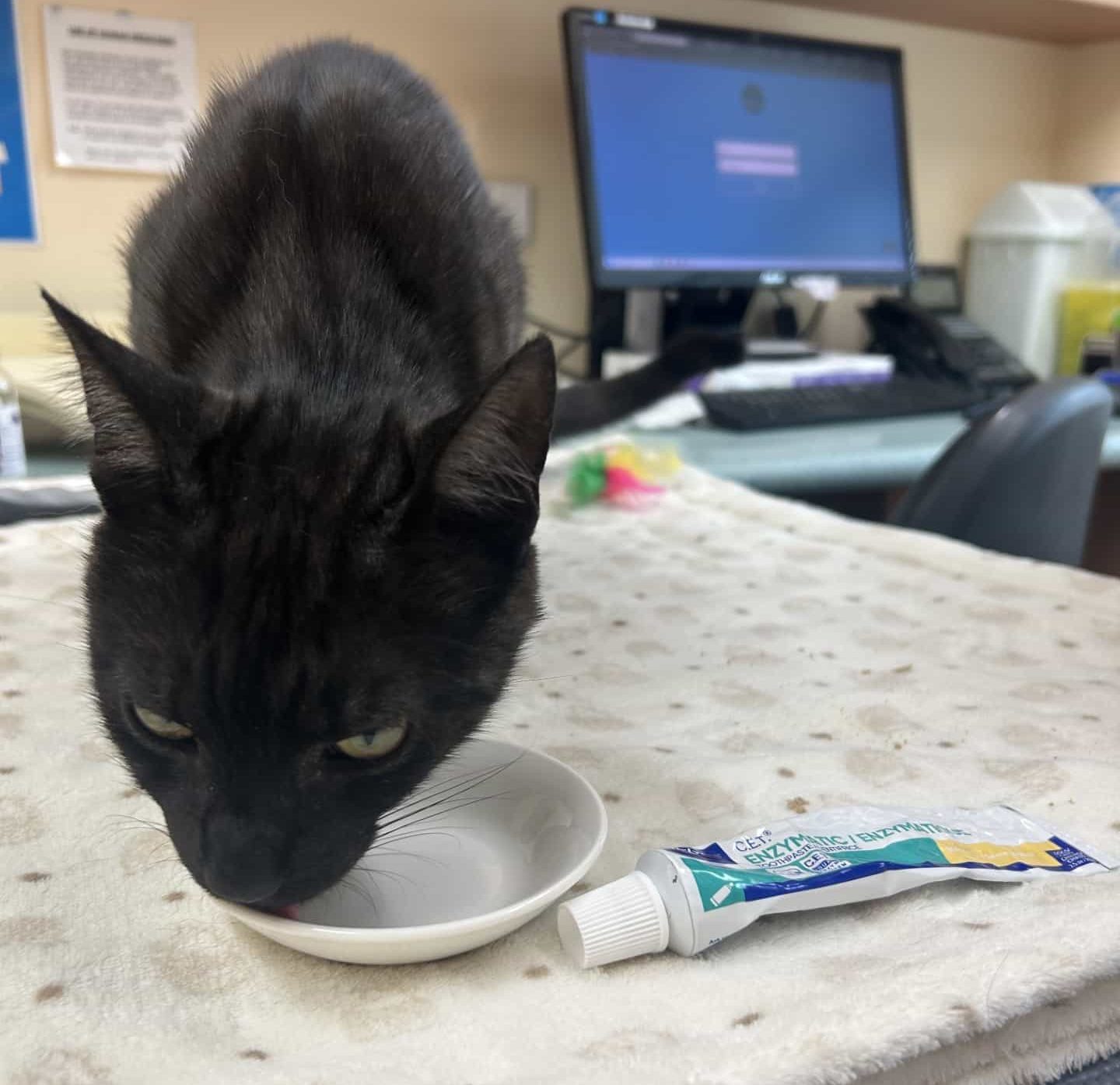
Ari licks toothpste from his food bowl.
No matter your pet’s age, follow these simple steps to begin:
Step One: Start Slowly and Keep It Positive
Step Two: Introduce Your Finger
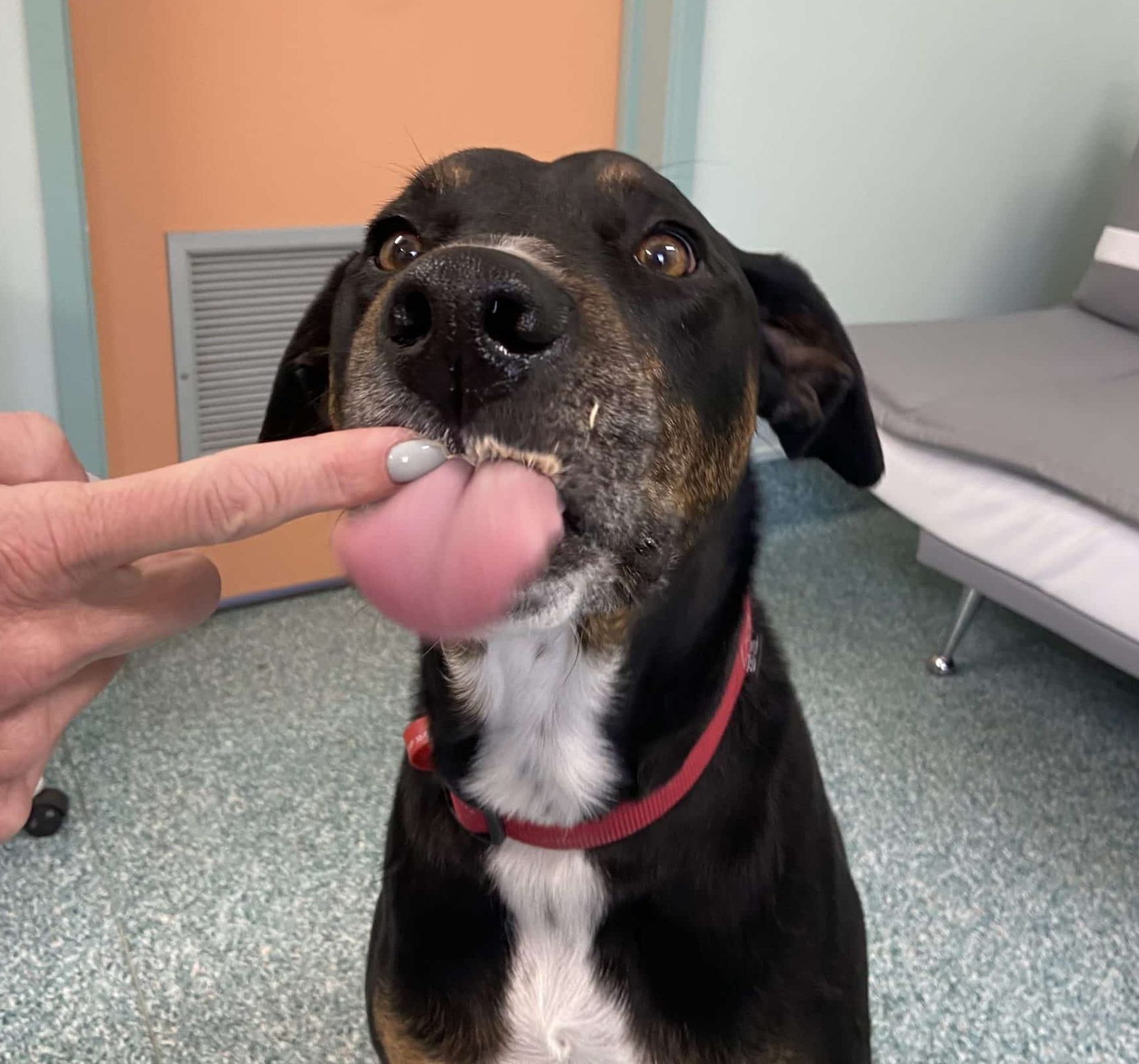
Arlo getting used to the taste of toothpaste.
Apply a small amount of toothpaste to your finger and allow your pet to lick it off. This helps them get used to your hand being close to their mouth.
Take extra care with teething kittens and puppies, as their gums may be sensitive.
Step Three: Touch The Teeth
Place a small amount of toothpaste on your finger and gently swipe it over one canine tooth.
Gradually build up to touching more teeth as your pet becomes comfortable.
This step introduces the sensation of something touching their teeth.
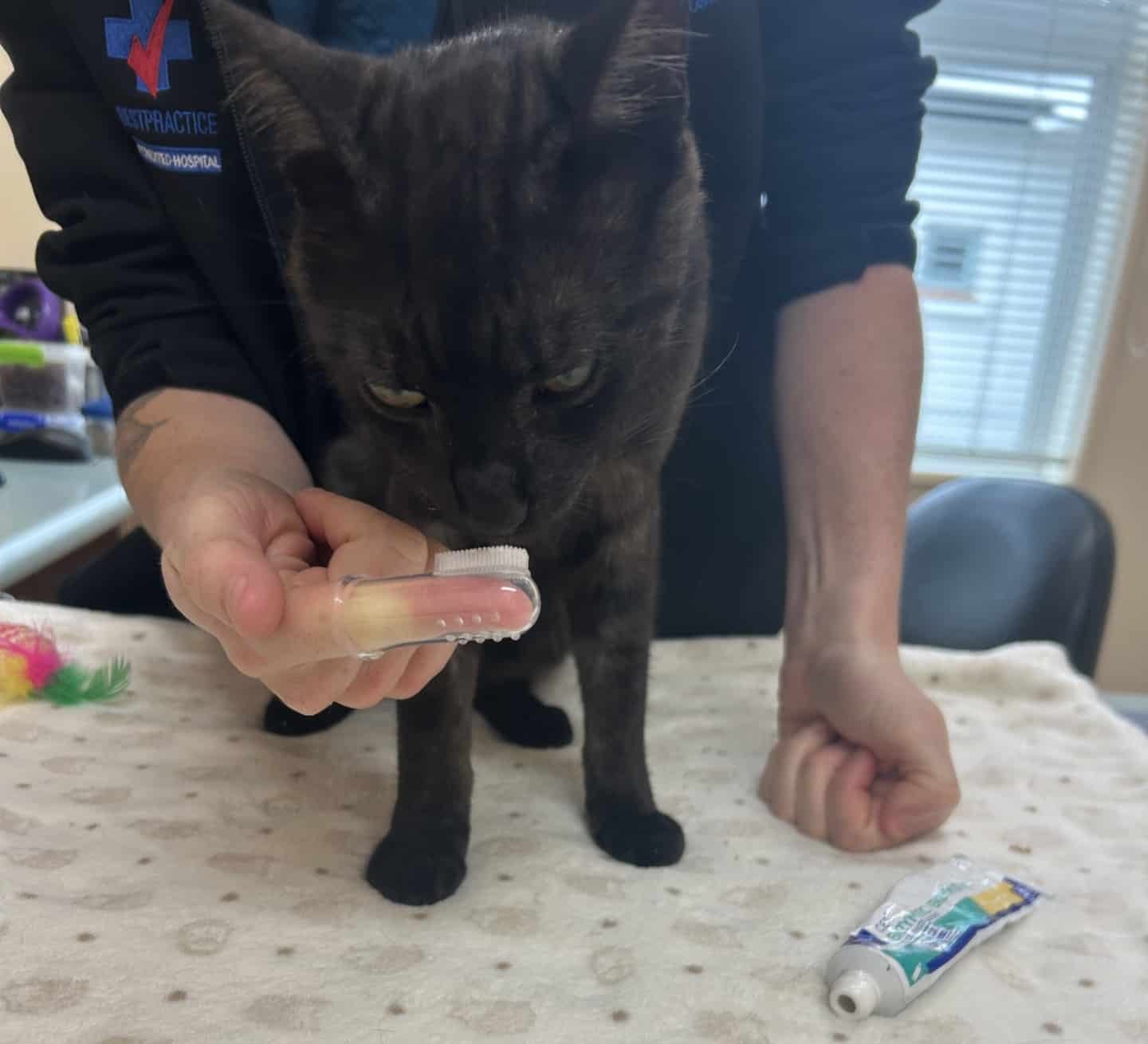
Introducing Ari to a finger brush.
Step Four: Introduce a Finger Brush or Pad
Use a finger brush or damp cotton pad with a small amount of toothpaste.
- Let your pet lick the brush or pad first to explore the texture
- Use slow, gentle swiping motions along the teeth
This helps them adjust to an object other than your finger in their mouth.

Arlo happily having his teeth brushed.
Step Five: Begin Brushing
Introduce a toothbrush with pet toothpaste.
- Allow your pet to lick or gently chew the toothbrush first
- Start with the canine teeth
- Gradually work back toward the molars as they become more comfortable
Understanding Desensitisation
Toothbrushing success comes from creating positive experiences.
By gradually introducing each step (desensitisation) and pairing it with something your pet enjoys – such as treats or praise (counterconditioning) – you help your pet stay calm and relaxed.
From Step Two onwards, take your time:
- Pause between movements
- Offer small rewards frequently
- Keep sessions short and stress-free
This prevents your pet from becoming overwhelmed and encourages steady progress.
Helpful Toothbrushing Tips
- Build a routine: Consistency is key. Even if you miss a day, regular brushing still improves dental health.
- Positioning matters: Have your pet facing the same direction as you and approach from the side – this feels less threatening.
- No need to open the mouth: Simply lift the lips to access the teeth.
- Watch your pet’s signals: If they pull away or resist, slow down and return to an easier step for a few days.
- Reward calm behaviour: Teaching your pet to sit still and rewarding them for it can make brushing much easier.
Recent Comments