
 Tapeworms hit the headlines last week!
The image of a slithering tapeworm segment reportedly found in a burger went viral (wrong metaphor!) last week. It looked to me like a freshly cast segment (proglottid) of the common tapeworm associated with flea infestations in dogs and cats – Dipylidium caninum. That has been confirmed by a noted parasitologist. It seems far more likely to have come from the domestic environment than the burger outlet.
It does give us a healthy reminder that there are a lot of gross parasites of people and pets and that we need to follow some simple rules to manage them.
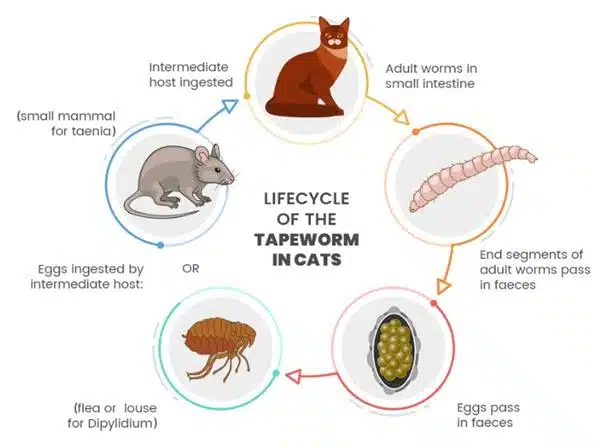
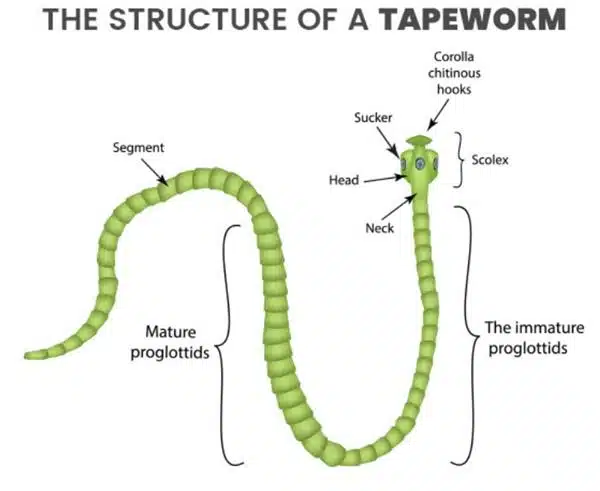
Tapeworms often have a complex life cycle. The adult reproducing stage of Dipylidium caninum is a 10-70cm tapeworm living in the gut of cats and dogs. The head (scolex) has four sharp hooks that attach it to the intestinal lining. The head produces segments which remain attached forming a long ‘tape’. Eventually segments detach from the tape and are passed out in the stool or slither out the anus. If your cat is sitting on your lap a segment could slither onto your clothing and even onto your burger. It would cause you no harm if you ate it. We don’t advise this!
 The segments dry out in a matter of hours shrinking and then look like a discoloured grain of rice when they are stuck to the fur around the anus before dropping off. Each segment is filled with hundreds of tapeworm eggs. Flea larvae feed on organic debris in the carpet or the outside environment. The next stage of the tapeworm parasite migrates from the intestine into the tissues of the flea. A cat or dog is infected when it ingests a flea while grooming.
People become accidental hosts only if they consume a flea – dead or alive. Children are more commonly infected since they spend more time playing on the floor and tend to have poorer hygiene practices than adults. If infected, people may show anal itchiness, bloating, diarrhoea, poor appetite, sleep disturbance and irritability. Many will show no obvious outward signs.
Dogs and cats may display scooting, poor appetite, weight loss, dullness or diarrhoea. These are the same signs found with other worm infestations which commonly occur in these pets and regular broad-spectrum worm treatment is recommended.
 The key to stopping infections with this tapeworm is effective flea control. Effective flea control has never been easier with many long-acting products available. Some combine with worm treatments and a couple include tapeworm treatments too.
I strongly recommend getting advice from one of our knowledgeable team and arranging a regular parasite control program with a product that nest matches your needs. Cats and dogs that share territory with untreated pets will have a different risk profile than homebodies.
Good health to you and your pets,
Hans Andersen and the Halifax team
Recent Comments